|
|
|
|
|
|
Showing posts with label Communications Strategy. Show all posts

Thursday, October 21, 2010

"Our members and supporters aren't on social media" (and therefore it won't work)

Bookmark and Share Social media has a loyal following.  Many are convinced while others from time to time that I encounter inevitably tell me a number of things:

  • "My members are in the field and don't have access to computers or internet"
  • "My members (usually in the medical field) are too busy to be on social networking sites (they might only be on at night for personal reasons)."
  • "Social media is for another demographic than mine"
Ok, so let me admit this (even as a fan of social media): Social media may not be for you — yet.  The studies on social networking engagement are abound and point clearly to the fact that this phenomena is not going to go away anytime soon.  As with any new technology, there will always be the quick adapters and those for a number of reasons who will lag behind.

Yet, just because your inclining may lead you to think that social media is not a right fit for your audience, I want you to at least open your mind to the possibility that perhaps...just perhaps social networking might make for a good portion in your organization's marketing mix.  As any marketing campaign is only as good as the marketing plan and research behind it, do a survey.  As the lines between personal and professional lives are increasingly blurred, social media is becoming a greater forum than ever for developing niche communities.  My suggestion is to find out how and where your members and supporters prefer to get their information.

For associations whose memberships are made of tradespeople in the field or who are not regularly in front of a computer with internet access, I foresee the growing popularity of mobile and cell text message campaigns bridging the gap.  Stats show that 1/3 of human kind has mobile internet access and that people are twice as likely to use text messaging and respond to this form of communication.  With services such as mGive, organizations can now link their websites to mobile call to actions campaigns.  Many organizations are becoming very effective in mixing traditional campaign calls that lead over to web/ social media presences.  How many have seen or heard an ad referring people over to a website?

Social media does not have to mean only blasting information out through Facebook, Twitter, etc.  Social networking is also a great support mechanism and strategy for getting the word out with other communications mediums.  In doing so, associations bridge the gap between different demographics of their supporters.
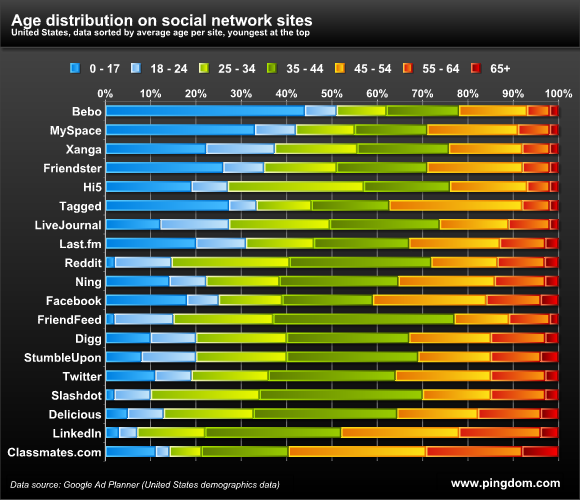


It is noteworthy that social media isn’t dominated by the youngest, often most tech-savvy generations, but rather by what has to be referred to as middle-aged people (although at the younger end of that spectrum).  This is a critical element to consider for professional associations whom, for the moment, more likely need to recruit and retain in their ranks.

What do you think?  Is ruling out social media outright a reaction to the unknown or have non-profit executives critical of this new means of communications done their homework in market research to justify the rejection?
----------
Mark A. Buzan, APR
Principal & Chief Magnifying Officer
Action Strategies
#3, 270 rue Champlain
Gatineau, Quebec J8X 3S1
819.770.2899 phone

LinkedIn Group for Public Relations: http://tinyurl.com/nonprofitideas
LinkedIn Group for Government Relations: http://tinyurl.com/nonprofitlobbying

Please take a look at my just released book: Online PR and Social Media for Associations and Not-for-Profits -http://www.onlineprsocialmedia.com/associations

Monday, June 28, 2010

Change Management, Focus Groups, and Communications in Associations & Non-Profits

Bookmark and Share

Change Management is a hot topic for many non-profits and associations. Navigating through this challenging environment however requires good communication strategy based on understanding your stakeholders. In what is now officially our 200th post (we’re quite proud!), I decided that more needed to be expanded on from my last post on this subject. In this video, I talk about how good focus group practice can open up the lines of communication so that change can occur smoothly.


What re your thoughts? How much have you integrated good communications planning and focus groups into change management issues?

----------

Mark A. Buzan, APR

Principal & Chief Magnifying Officer

Action Strategies

#3, 270 rue Champlain

Gatineau, Quebec J8X 3S1

819.770.2899 phone

http://www.actionstrategies.ca (Action Strategies website)


LinkedIn Profile: http://ca.linkedin.com/in/markbuzan

LinkedIn Group for Public Relations: http://tinyurl.com/nonprofitideas

LinkedIn Group for Government Relations: http://tinyurl.com/nonprofitlobbying


Please take a look at my just released book: Online PR and Social Media for Associations and Not-for-Profits -http://www.onlineprsocialmedia.com/associations

Sunday, June 27, 2010

Good Communications Planning Delivers Good Change Management


Bookmark and ShareWith my involvement in the Canadian Society of Association Executives Ottawa-Gatineau Chapter, I’ve had the privilege of sitting on a number of committees including the chapter’s events committee. Year after year, one of the hottest topics remains change management in associations. Obviously, anytime one brings up the prospect of bringing about an important change in an organization, there are important governance issues to be considered. However, the mark of good organizations and how they manage that change in my mind comes from good communications planning.


By learning to identify stakeholders, select effective communication strategies and create ownership, today’s leaders can become successful change agents. Communication channels that allow those effected to feel as though their concerns are learned are the ones that facilitate the process most. With all that said and done, good communications planning will help an organization significantly navigate through what can otherwise be an organizational land mine. However, not all communication plans are created equally and many miss the mark. Communication should be more than just an occasional, sporadic activity.


If your current communications plan does not take into consideration how an important change will take place in a form that will engage everyone, the time to revisit it is now. In doing so, some of the best practices for ensuring everyone is on the same page include:

  • Developing a written communication plan to ensure that all of the following occur within your change management process.
  • Communicate consistently, frequently, and through multiple channels, including speaking, writing, video, training, focus groups, bulletin boards, Intranets all that is known about the changes, as quickly as the information is available.
  • Provide significant amounts of time for people to ask questions, request clarification, and provide input.

Change is a constant in today’s organizations and increasingly leaders are required to manage both planned and unexpected changes triggered by both internal and external events. Helping an organization maintain a sense of stability while championing change can be an extremely difficult challenge. On that note, Action Strategies has produced a number of very successful and thorough communications plans. If your organization is undergoing significant change management, you can learn more about our service by clicking here.

----------

Mark A. Buzan, APR

Principal & Chief Magnifying Officer

Action Strategies

#3, 270 rue Champlain

Gatineau, Quebec J8X 3S1

819.770.2899 phone

http://www.actionstrategies.ca (Action Strategies website)


LinkedIn Profile: http://ca.linkedin.com/in/markbuzan

LinkedIn Group for Public Relations: http://tinyurl.com/nonprofitideas

LinkedIn Group for Government Relations: http://tinyurl.com/nonprofitlobbying


Please take a look at my just released book: Online PR and Social Media for Associations and Not-for-Profits -http://www.onlineprsocialmedia.com/associations

Sunday, June 13, 2010

Getting clear on your outreach campaigns


Bookmark and Share

One of the challenges non-profits and associations come across when considering either a government relations or public relations campaign is identifying the parametres around which it will operate. For example, what will the budget be? What will be the measures of success? What challenges will be encountered that might hinder success?


Regrettably, this is a situation I come across from time to time when approached from non-profit executives. They are intrigued by the opportunity to make a better name for their organization but all too little informed on what is involved in undertaking an outreach campaign. As consultant however, I can say that if you don't really know what you want, my job becomes rather difficult in helping you!


So, as such, it dawned on on me that a few pointers might be useful in helping non-profit and association executives better get a grasp on their own public relations, outreach and lobbying needs. Before going out to a call for proposals or RFP, you can help both your organization and a prospective consultant by undertaking the following:


  1. Get clear on your budget! How much can you reasonably spend? The worst thing you can do is state, "send us a figure and we'll consider whether we wish to move forward". That can mean many things! As a consultant, I can offer you a program or campaign worth anywhere from $500 to $100,000 and more! It all depends on scale and as a consultant, I can be of more help to you if you are truly honest with me on how much you can afford.
  2. Do your research. In relation to your budget, it's natural for your organization to want the value of a $1 million campaign but if you only have $50,000, be reasonable in your expectations. Further on research, if you are looking for a particular tactic or strategy to be undertaking, be clear as to why you want it. Is it something you have clearly seen work for another organization or are you really sure that this will reach your audience?
  3. Understand your audience or at least be willing to allow the consultant to conduct that research for you. The best awareness and outreach strategies are those that make a clear effort based on research. Communicating without a plan means putting out a flood of messages that could be unrelated, disconnected, contradictory, unfocused, with no clear purpose or direction. Sadly, many nonprofits get so wrapped up in their daily activities that they can lose site of the forest for the trees. At Action Strategies, we cut through the clutter to ensure your communications and public relations lead to more donations, more memberships, greater member retention, support and awareness for your cause from whomever is your audience (click for more info).
  4. Be clear about your brand. No matter what strategy you choose, your brand is the essence of your campaign. If you don't know who you are, don't expect your audience to figure it out.

Sadly, I believe that it's the lack of up front thinking through the issues before engaging the idea of outside help that creates frustration on the consultant's side. It also presents the potential for misunderstandings and disappointment on the non-profit's side in the end when results might not measure up to expectations. There are at least some of my experiences. What are yours?


----------

Mark A. Buzan, APR

Principal & Chief Magnifying Officer

Action Strategies

#3, 270 rue Champlain

Gatineau, Quebec J8X 3S1

819.770.2899 phone

http://www.actionstrategies.ca (Action Strategies website)


LinkedIn Profile: http://ca.linkedin.com/in/markbuzan

LinkedIn Group for Public Relations: http://tinyurl.com/nonprofitideas

LinkedIn Group for Government Relations: http://tinyurl.com/nonprofitlobbying


Please take a look at my just released book: Online PR and Social Media for Associations and Not-for-Profits - http://www.onlineprsocialmedia.com/associations

Saturday, May 29, 2010

Maximizing Non-Profit marketing, sponsorship and fundraising opportunities for more revenue

How to do we maximize our marketing opportunities for more revenue for our organization? When it comes to sponsorship and the fundraising that results from it, good PR strategy cannot be ignored. In fact, potential sponsors expect you to have a solid communications strategy! I hope from this recent video that if you have had any doubts about the relation between solid communication strategy and its impact on revenue generation for your organization, that doubt is now removed!


ShareThis
Please let me know your thoughts! What has been your experience? Please leave a comment.
----------
Mark A. Buzan, APR
Principal & Chief Magnifying Officer
Action Strategies
#3, 270 rue Champlain
Gatineau, Quebec J8X 3S1
819.770.2899 phone
http://www.actionstrategies.ca (
Action Strategies website)

LinkedIn Profile:
http://ca.linkedin.com/in/markbuzan
LinkedIn Group for Public Relations:
http://tinyurl.com/nonprofitideas
LinkedIn Group for Government Relations:
http://tinyurl.com/nonprofitlobbying

Please take a look at my just released book: Online PR and Social Media for Associations and Not-for-Profits -
http://www.onlineprsocialmedia.com/associations

Saturday, December 05, 2009

Are you moving your organization into 2010 with a Social Media Strategy?

Social media, like it or not, is here to stay. Unfortunately, many non-profits and associations still remain confused on how to implement social media into their communications initiatives. A mystery for many, social media need not be beyond the capacity of non-profit organizations.

When Action Strategies works with it's clients on social media strategy, we work to repurpose your organization’s online PR and social media strategy is so as to wire together any content that you produce into many different web sites, in as automated a process as possible. To be effective, you need to have an understanding of how this will fit into your overall public relations and establish which social media presences will be your "anchors" vs. your "outposts". We walk our clients through developing a very robust identity and set of connections on specific Anchor Sites (eg LinkedIn, Facebook, YouTube, etc), and then develop a thinner identity on a large number of Outpost Sites. The Outposts lead people both to your Anchor sites and to your main web site. At the same time, your friends/connections/contacts will be connecting to you through your Anchors, and your prospects, clients and the media will find you through better and more consistent exposure on Google.

By undertaking an outpost and anchor strategy, the objective here is to connect with audiences all over the social media sphere (and internet) and draw them into your website, blog, or in the very least, your anchor sites where your team most regularly interacts with fans and supporters.


Posts on outpost sites incite visitors to your profiles downwards through to the various other positions your organization holds on the net and as a result, allow them to connect with other fans of your cause. In addition, by creating such buzz on so many other sites on the net, your organization's position in Google search engines improves and the likelihood of connecting with media, sponsors and other connections increases too.

Because the power of your strength in social media rests upon continually putting out good and relevant content, the challenge comes in assuring that your potential audiences receive information about your organization through the numerous internet forums they prefer. The trouble of course in all of this is identifying which out of the 300+ social media sites out there will act as your anchors and outposts. As an organization, you cannot nor should you try to be in every single sphere of activity. Answering that question involves the first step of a social media strategy: the social media audit which answers clearly where your audiences are located and how you need to reach out to them.

Do you know where your audiences are in the social media sphere? Give us a call for a free consultation and quote on setting your organization on the right step.
__________________
Mark Buzan is principal and chief magnifier in Action Strategies, a full service strategic communications, public relations and public affairs consultancy for nonprofits and associations. Contact him for advice on reaching audiences you may or may not have yet considered in your marketing communications and PR campaigns. You can view his website at www.actionstrategies.ca.

Wednesday, November 25, 2009

CSAE Conference: Lessons in the Need for Strategic Plans

For those not already aware, I'm here in Toronto this week attending the Canadian Society of Association Executives (CSAE) annual convention. While there are a number of subjects we have already covered and undoubtedly more will come, one topic in particular stands out:

"Why do good association executives get fired?"

Presented by Jack Shand (Leaderquest Inc.), there are a number of factors that point to indicators of why matters can go awry. More often than not, association executives themselves are not to blame. They are the victim of poor strategic plans or the lack thereof of any strategic planning itself. When non-profits exist in a vacuum of a clear idea of where it is that they are going, boards and volunteers (not to mention staff) can be left in a guessing situation of what can be expected as measures of success. When this occurs, association executives can soon find themselves in an environment where no matter what they do, their efforts and hard work can be quickly placed in doubt. While the ramifications of this may seem evident for senior association and non-profit staff, I cannot help avoid thinking that from an effective communications or even government relations perspective for NPOs, there are important lessons to be learned as well. PR and lobbying efforts in an association environment will only be as effective as the planning processes that exist behind them.

Strategic planning is needed on two levels. First, a non-profit itself needs an overall strategic plan that sets a clear mission and direction. It cannot be a vague document nor can it set out a laundry list of "to-do's". If an organization's overall strategic plan is unclear, it cannot be expected of a communications professional or lobbyist to reach clear goals. After all, as communicators and government relations professionals, we set in place initiatives with the objective to back up an organization's strategic plans. In the same tune, communications and government relations initiatives need to have their own planning processes. If we fail to plan, we plan to fail!

So, what are your thoughts? Do you think association and non-profit organizations given enough attention to strategic planning? What about in general terms towards the need for communications and advocacy planning? I argue that more than ever, NPOs need to pay more attention to the value of planning of course for the strategic direction of their organization - but they also need to pay attention to the value of strategically planning their advocacy to government and their communications. Without such clear objectives laid out, too often we see the professionals that act in this sphere fall victim to the whims of boards of directors who may not have the insight of all of the ins and outs or successes that have occurred.
___________________________________
Mark Buzan is Principal of Action Strategies, a GR Consultancy for non-profits. If you have questions on how you feel your organization could benefit from legislative monitoring services or even undertaking a grassroots advocacy initiative. Subscribe now to his Lobbying tips newsletter at www.actionstrategies.ca

Saturday, May 09, 2009

The value of polling & surveys in delivering high quality communications

Keeping abreast of the needs and wants of your membership, donors, and potential supporters is vital to a non-profit’s objectives and overall success. Ensuring that you are providing exactly what your audiences want, can seem like a never-ending battle but in fact, it's the life blood of build effective communication.

While most NPO (non-profit organization) staff are in touch with their members and supporters, the temptation to assume they know what they want needs to be resisted. Without truly understanding your supporters and evaluating the efforts to reach them, more time is spent on generic marketing with often withered results. Consequently, as you may have guessed, is a mixed bag of results. Without measuring marketing and advocacy efforts, non-profits throw money and time out the window.

The Case for Polling/ Surveys

Market research is essential in ensuring that your message is effectively targeted to the targets you are trying to reach. With a plethora of media for dissemination of key messages, it is imperative to sustain your advocacy efforts by thinking with a clear line towards understanding what motivates your audiences and stakeholders. Strategic communication planning begins with a concrete foundation of audience research, and then effectively applies that research to targeted messaging.

So, the obvious question is: how do I effectively measure my marketing efforts? How do I know if the messages are inspiring my membership to act, interact, or donate? By knowing exactly, what it is your audiences are looking for on a majority level, you can provide it; and re-strategize your advocacy plans accordingly.

Here are some of the best ways and tips for analyzing your PR and marketing efforts for the future success of your organization.

1. Polling/ Surveys: One of the most obvious answers is polling/ surveying your members, donors or target audiences. But how do you best go about that? Though many people are too busy to leave feedback and comments for a service or program, if you approach them in the correct way, they will be more likely to do so. One good way is to ask for feedback and comments on your email notices and newsletters. Another is to address them from your website for general or specific feedback.

2. Specific and General Feedback: Make sure when reaching out to your membership that you ask for both general feedback as well as specific. For example, if you are trying to determine if a specific program is effective in generating support, ask a specific question to that end. If, on the contrary, you are just beginning to gather responses on your business, ask for general feedback. Depending on the general response of this collection, you’ll see a pattern in the elements that your membership like and dislike about your organization.

3. Just Ask: Simply asking your membership at programs, events, and the like; can garnish a lot more information that you might expect. Not only does it make your customers feel like their opinion matters and that they are part of your organization’s mission, but it also gives them the opportunity to candidly express their opinions on general and specific matters at your nonprofit. Remember it is vital that non-profit and association executives keep their finger on the pulse of their organization. The best way to do this is through face-to-face networking.

4. Record: Most importantly, do not think that you can keep a running memory bank on all the different feedback you receive. With all the short and long term happenings of a non-profit, it is impossible to keep every opinion coherent and unblemished in your mind. Find a way to effectively record these responses. This can as simple and as cost-free as a variety of excel spreadsheets on your laptop.

5. Analyze: It should go without saying, finding a set time and manner to analyze all these results is just as important as collecting the information. Set time aside regularly to review each means of response, dividing the responses according to question and topic.

6. Poll and Analyze Often: Polling and doing customer research once in awhile is a good start, but the more you can enact this sort of response system, the better you can stay on top of what your membership wants from you in relation to your non-profit’s mission, goals, and community action.

7. Devise a Plan and Act: After gathering the information, devising a short and long term plan to optimize your nonprofit’s initiatives and overall scope is crucial. While it’s good to know what you customers want, it is more important to offer them the actual solution. Even if the answer is expensive or will require more than what you have in resources, manpower, and/or funds; developing a plan to reach that goal and taking small, measurable though realistic steps towards it, will make your membership feel connected to your non-profit and also that their voice counts for something.

These are all simple ways that organizations can keep tabs on the effectiveness of their marketing strategies. It is always beneficial to perform a communications or marketing audit through a third party. The help of a professional specialized in non-profit advocacy can assist your organization in an exhaustive analysis of your marketing efforts and as a result, carry out your objectives.
____________________
Mark Buzan is Principal and Chief Magnifier in Action Strategies, a full service Strategic Communications, Public Relations and Public Affairs Consultancy for non-profits and associations. Make sure to contact him for advice on reaching audiences you may or may not have yet considered in your marketing communications and PR campaigns. Drop him a line if you are looking for help in developing a public relations campaign. You can view his website at www.actionstrategies.ca.

Friday, February 20, 2009

The value of stories for non-profits

Recently, I've made the habit of dong something I think more non-profit executives should do. Namely, reviewing the blogsphere and LinkedIn questions for gaining insight in terms of what's "out there". Stumbling across the internet, I found a question that got me thinking:

Does your organisation use personal stories as part of your appeal for financial support? Do have policies and guidelines in place in this regard?

What a telling question! While the posting's intention was directed at how organizations can better fundraise, the practicality of telling and developing a good story also applies to effective non-profit public relations. In the case of the Canadian Paralympic Committee, I've seen first hand the benefit of a media relations department even laying out a story guide regularly distributed to journalists. It's a fantastic means of keeping your cause top of mind with the media without constantly having to push out press releases. With a story board or calendar on hand, it leaves NGO PR professionals to rely on passive persuasion to talk up your cause.

To that effect, a perfect quote I found on a related LinkedIn Q&A from Chuck Anderson of the United Way of America says it all:

Personal stories/attributions add more legitimacy to your appeal on a human level. If they are designed as a tear jerker to get people to give, some may feel they are being manipulated. However they can be very powerful at raising money if done tastefully. There are a group of people who need the cold hard facts too. They don't respond to the tear jerker approach so you have to walk a fine line. Finally in the non-profit arena of today I believe it is more important to document and sell what your organization is doing to reduce/eliminate the root cause of the social problem you are addressing. The stating of a business case to fundors that your agency is making long term positive change coupled with supportive data would therefore be important. Your agency has to have data to back up your assertion. People want to know their donated dollars are being used effectively. With the tightening of the economy, the more critical this aspect will be.

_____________________________
Mark Buzan is Principal and Chief Magnifier in Action Strategies, a full service Strategic Communications, Public Relations and Public Affairs Consultancy for non-profits and associations. Make sure to contact him for advice on reaching audiences you may or may not have yet considered in your marketing communications and PR campaigns. Drop him a line if you are looking for help in developing a public relations campaign. You can view his website at www.actionstrategies.ca.

Sunday, December 14, 2008

Linking Communications to Membership Strategy

So, we've arrived at year's end. Notably, I have seen most non-profit and association offices rapping up their work and settling into Christmas parties. But as staff gather around the eggnog and water cooler, this also becomes the time NGOs must analyze the past year and that which is coming. 2009 is upon us and if there has been anything at all that I have learned about the non-profit sector is that membership recruitment and retention is the lifeblood of an association.

Communications is really the heart that pumps the blood of membership outreach efforts. Without an effective communications strategy, members feel disconnected from their association. Donors don't connect with a charity's cause and result, don't see the need to donate! For all to occur wherein donations keep flowing and members become potentially involved in the board and its committees, an organization's intrinsic value needs to be communicated and understood. The same goes especially for campaigns. Here, not only do your audiences need to feel related to, your campaign should have a strategy to relate those campaigns back to the overall value you wish to have identified when thinking of your association.

In all, while I may sound harping, year's end really is the time for non-profits to think of this as the perfect period for a Communications Strategy New Year's Resolution. Namely, let's think of ways that membership and donor strategy can and should be linking to how audiences need to be communicated with.
_____________________________
Mark Buzan is Principal and Chief Magnifier in Action Strategies, a full service Strategic Communications, Public Relations and Public Affairs Consultancy for non-profits and associations. Make sure to contact him for advice on reaching audiences you may or may not have yet considered in your marketing communications and PR campaigns. Drop him a line if you are looking for help in developing a public relations campaign. You can view his website at www.actionstrategies.ca.